
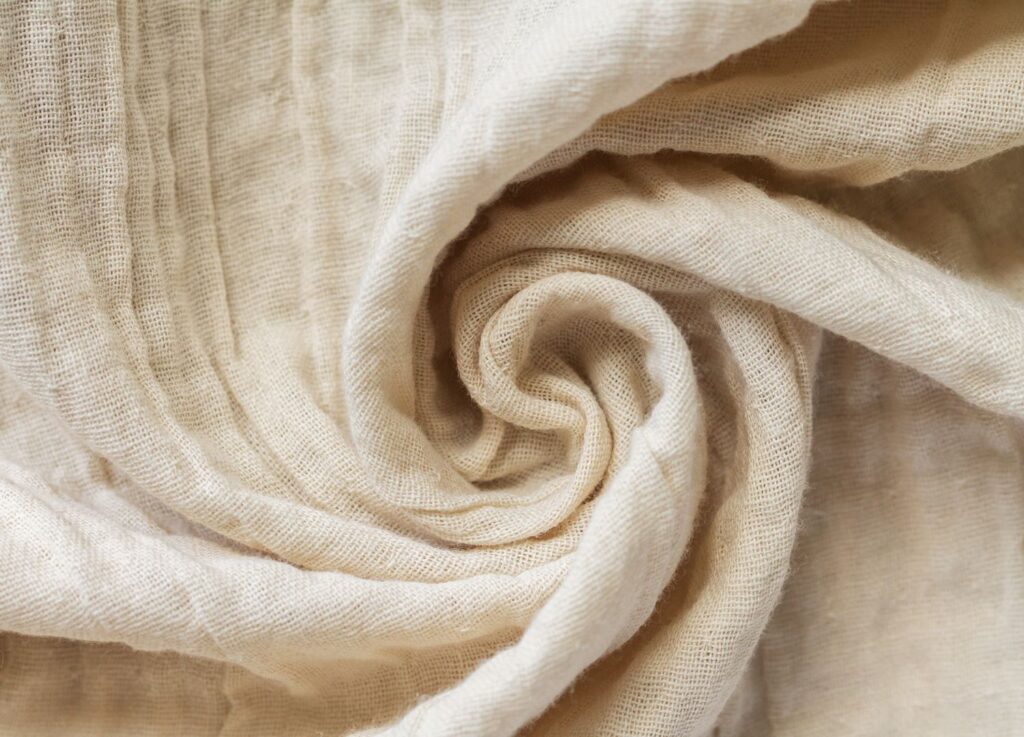
The label may say 60% cotton, 35% polyester, 5% elastane. That tells you composition, but not behaviour. It does not tell you how the garment will wear, how it will age, how it can be repaired, or what will happen to it at the end of its life.
Fibre determines all of that.
Understanding what a garment is made from changes how you relate to it. You wash it differently, store it differently, and when something goes wrong, a worn knee, a splitting seam, a failed cuff, you know what you are working with and what will hold. A garment you understand is one you can maintain. A garment you can maintain is one worth keeping.
This guide covers the natural fibres most relevant to everyday and working clothing: cotton in its many forms, wool in its many forms, and linen, along with waxed cotton as a treatment. It is a reference document, intended to be returned to.
Why Natural Fibres
Natural fibres come from plants and animals. They absorb moisture. They respond to heat. They abrade. They decay.
Synthetic fibres are extruded plastics. They melt. They pill. They shed microfibres. They do not biodegrade in any meaningful timeframe.
The environmental argument is straightforward, but the practical argument matters more here: natural fibres are repairable in ways synthetics often are not.
When you patch cotton with cotton, or darn wool with wool, the fibres grip and abrade into each other under stitch tension. Over time, the repair integrates into the surrounding cloth. The same principle is visible in Japanese boro textiles, where decades of cotton patches become structurally unified through repeated stitching. Two pieces of cloth, joined with cotton thread, become one.
Synthetics can be patched, but they do not abrade and lock together in the same way, and they degrade through processes that stitching cannot reverse.
Synthetics have legitimate uses: waterproof membranes, high-performance alpine equipment, extreme weight-sensitive applications. But for everyday garments and long-term use, natural fibres are more compatible with maintenance.
Fibre, Yarn, Fabric, Garment
Before going further, it helps to separate four levels:
- Fibre is the raw material: cotton, wool, flax.
- Yarn is fibres spun together.
- Fabric is yarn woven or knitted.
- Garment is fabric cut and constructed.
Two garments labelled “100% cotton” may perform completely differently because yarn thickness, weave structure, and fabric weight determine durability more than fibre content alone.
Weight is particularly useful. Grams per square metre (gsm) tells you more than branding. A 400gsm cotton drill will outlast a 120gsm cotton poplin, even though both are cotton.
Cotton
Cotton comes from the seed pod of the Gossypium plant. It is a cellulose fibre, harvested, cleaned, spun, and woven or knitted into cloth.
Cotton varies dramatically depending on fibre length. Longer staple cotton, such as Egyptian or Pima varieties, spins into stronger, smoother yarn with less pilling. Short-staple cotton produces weaker yarn and fuzzier cloth.
Cotton is breathable, absorbent, and tolerant of repeated washing. It weakens gradually through abrasion rather than sudden failure. Damage is rarely structural until it is ignored for too long, which makes cotton highly repairable.
Woven Cotton
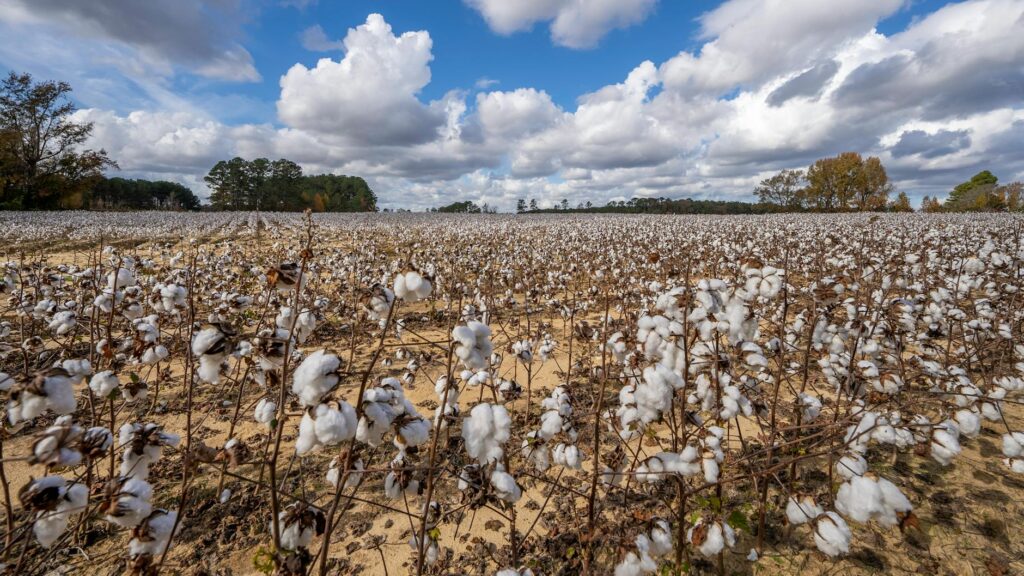
Woven fabrics interlace warp (lengthwise) and weft (crosswise) threads. The pattern of that interlacing determines the weave structure.
Drill and Twill
Drill is a twill weave with a diagonal rib. It is dense, stable, and hard-wearing. For over a century it formed the basis of military and industrial trousers. Khaki drill, a lighter tan-coloured version, was the basis of the British Army’s colonial field uniform from the 1840s onwards.
Heavier cotton drill remains one of the most repairable fabrics available. When knees or cuffs wear through, patching from behind restores strength effectively. Patch before a hole forms.
Denim
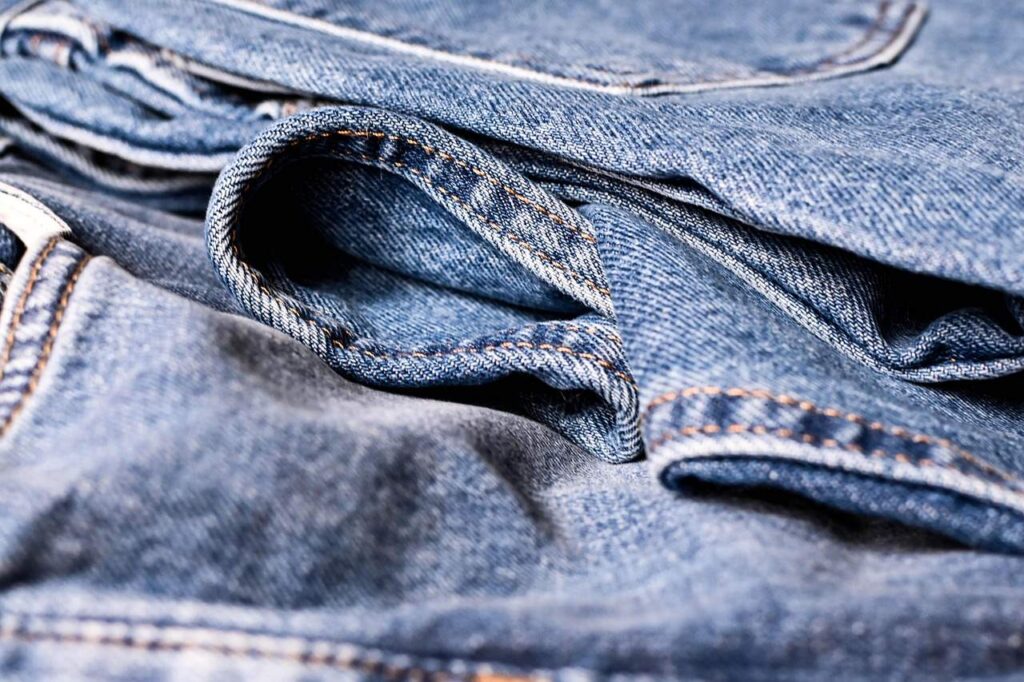
Denim is also a twill, traditionally woven with indigo-dyed warp threads and undyed weft. The indigo sits mostly on the yarn surface, so abrasion reveals the lighter cotton beneath. Fading follows the stress points, thighs, knees, the seat, and is a direct record of how the garment was used.
The riveted work jean, patented in 1873 by Levi Strauss and Jacob Davis, was designed for miners who needed reinforcement at stress points. Copper rivets and bar-tacks were functional solutions. That construction has changed very little in the 150 years since.
Denim records use. Repairs follow that record. Reinforcing stress points before full failure significantly extends lifespan.
Gabardine
Gabardine is a tightly woven twill developed in 1879 by Thomas Burberry. The yarn was treated before weaving, producing a wind-resistant, weather-shedding fabric without full waterproofing.
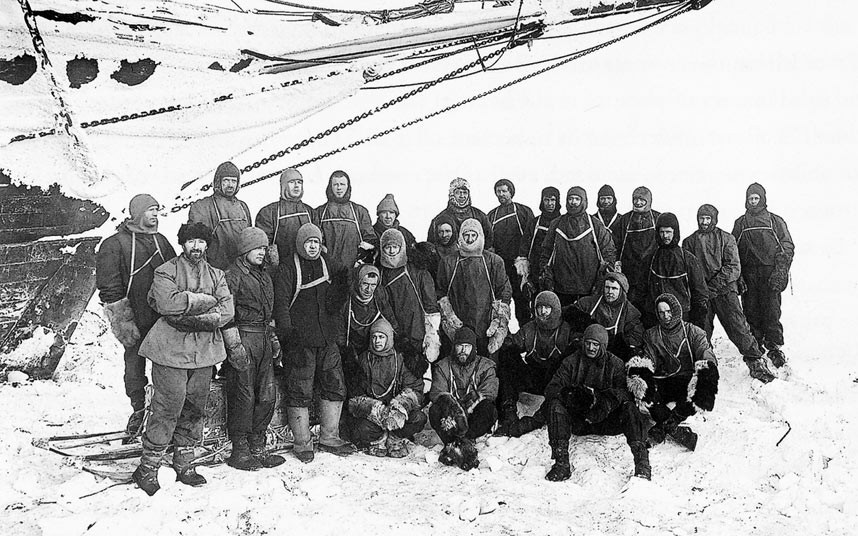
Ernest Shackleton wore Burberry gabardine on his Antarctic expeditions. Roald Amundsen wore it reaching the South Pole in 1911. George Mallory wore it on Everest in 1924. It was chosen because it worked under prolonged exposure in conditions where lesser equipment cost lives. Gabardine also became the cloth of the military trench coat, a design Burberry developed for the British War Office in 1901.
Knitted Cotton
Knitting loops yarn through itself, producing stretch. Knitted fabrics are comfortable but less abrasion-resistant than woven cloth.
Jersey, used for T-shirts, is light and stretchy. Cotton absorbs moisture vapour and releases it gradually. Polyester versions move liquid sweat but do not buffer moisture, and feel clammy in sustained wear. If you cannot tell from the label, wear tells you.
Cotton loopback sweatshirts and fleeces can last a decade or more with reasonable care. They soften and fade over time rather than pilling. A 400-450gsm cotton loopback is a different object from a polyester fleece of equivalent weight. It ages, it repairs, and what degrades from it does not persist.
When repairing knitted cotton, use flexible stitches and matching fibre thread. Rigid stitching on stretch fabric causes distortion.
Waxed Cotton
Waxed cotton is woven cotton, usually medium-weight twill, impregnated with paraffin-based wax under heat. The wax fills gaps between threads, increasing water resistance while retaining breathability. The fabric stiffens when cold and softens with wear and body heat.
Waxed cotton was standard material for oilskins, motorcycle clothing, and field jackets before synthetic weatherproofing existed. Barbour, founded in South Shields in 1894, made waxed cotton jackets for fishermen, motorcyclists, and farmers and supplied them to the Royal Navy during both World Wars.
Waxed cotton is not disposable. It is maintained. The wax wears off at stress points and creases over time, and the jacket needs reproofing, not replacing. Tears can be patched. Seams can be resewn. The fabric improves in character with age rather than degrading.
Machine washing removes the wax and damages the structure. Wipe clean with a damp cloth. Re-wax when the surface stops shedding water. The reproofing process is covered in detail in Field Guide No. 3.
If this kind of material is useful to you, the Speedwell Works newsletter goes further: fortnightly letters on textiles, garments, repair, and the knowledge behind the things you own. It is free. Sign up at speedwellworks.com/newsletter.
Wool
Wool is protein fibre shorn from sheep. It is naturally crimped, which traps air and gives woollen cloth its insulating properties. Its surface scales allow fibres to mat together under heat and agitation, which is the process behind felting, boiled wool, and the irreversible shrinkage that follows a too-hot wash.
Wool absorbs moisture vapour while remaining warm against the skin. A cotton base layer soaked in sweat stays wet and cold; wool in the same conditions continues to insulate. This is why wool was the default military fibre for centuries: it worked in the widest range of conditions. Wool also chars and self-extinguishes under flame rather than melting and continuing to burn, a property synthetics do not share.
Woven Wool
Serge
Serge is a worsted twill woven from long, combed fibres spun tightly into smooth yarn. The British Army’s Second World War Battledress used wool serge throughout: it was warm when wet and durable enough for sustained field use. Properly stored serge garments from the 1940s remain structurally sound today, which is a reasonable test of a fabric’s longevity.
Melton
Melton is heavily milled wool, compacted until the surface is nearly windproof and the weave barely visible. It resists fraying when cut, tolerates hard use, and is the classic cloth of the naval pea coat and heavy military overcoats.
Tweed
Tweed is coarse, textured woven wool for field use. Harris Tweed is woven by hand in the Outer Hebrides from Scottish wool and carries a protected designation of origin, one of very few textiles that does.
Wool repairs best with wool. Darning integrates effectively because fibres interlock under tension, and a well-executed darn in matching weight wool becomes part of the cloth.
Knitted Wool
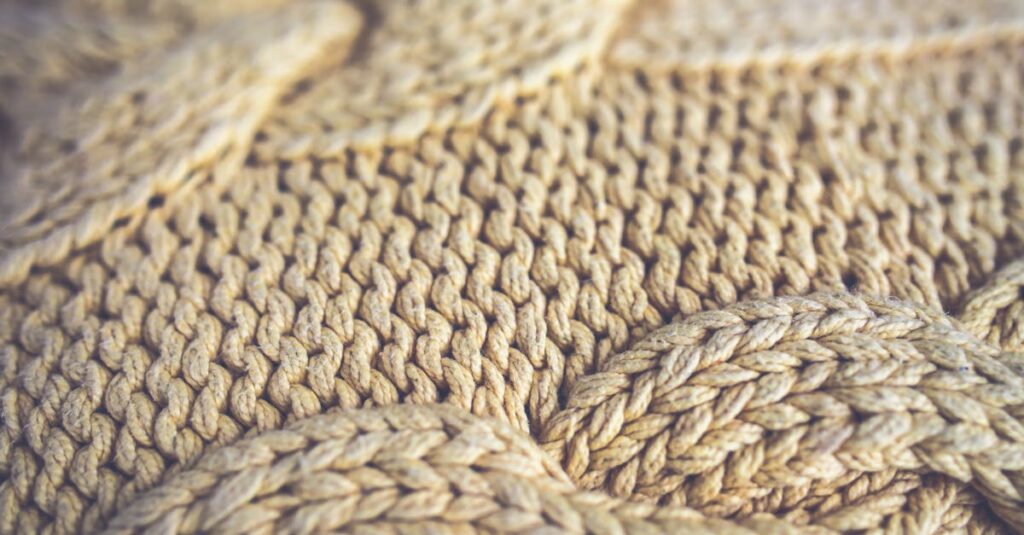
Gansey
The gansey, also called a guernsey, originated in the Channel Islands and spread throughout British coastal fishing communities from the 16th century onwards. By the 19th century, distinct regional patterns had developed in ports from Cornwall to Shetland.
It is knitted in the round from 5-ply worsted wool, historically known in the trade as Seamen’s Iron, on five steel needles, with no seams. The tight gauge makes the fabric almost windproof and causes water to bead rather than soak in. The lower body and sleeves are kept plain deliberately: worn sections can be pulled back and reknitted without disturbing the rest of the garment. The patterned yoke and upper sleeves add an extra layer of material at the most exposed points.
Every design decision in a gansey was functional before it was decorative. This is a useful principle when evaluating any working garment: the details are there for reasons. Understanding those reasons makes the garment make sense.
Aran
Aran knitting, associated with the Aran Islands off the west coast of Ireland, uses heavy cabled patterns that add bulk and warmth. Traditionally knitted in undyed, unwashed wool, the natural lanolin was retained in the fibre, contributing to its weather resistance.
Boiled Wool
Boiled wool, or loden cloth in its Austrian form, is produced by milling knitted wool under heat and moisture until the fibres mat together into a dense, compacted material. The result is windproof, resistant to light rain, and almost impervious to fraying. It has been the standard cloth for Alpine mountain clothing for centuries, and it can often be cut and patched without hemming.
Linen
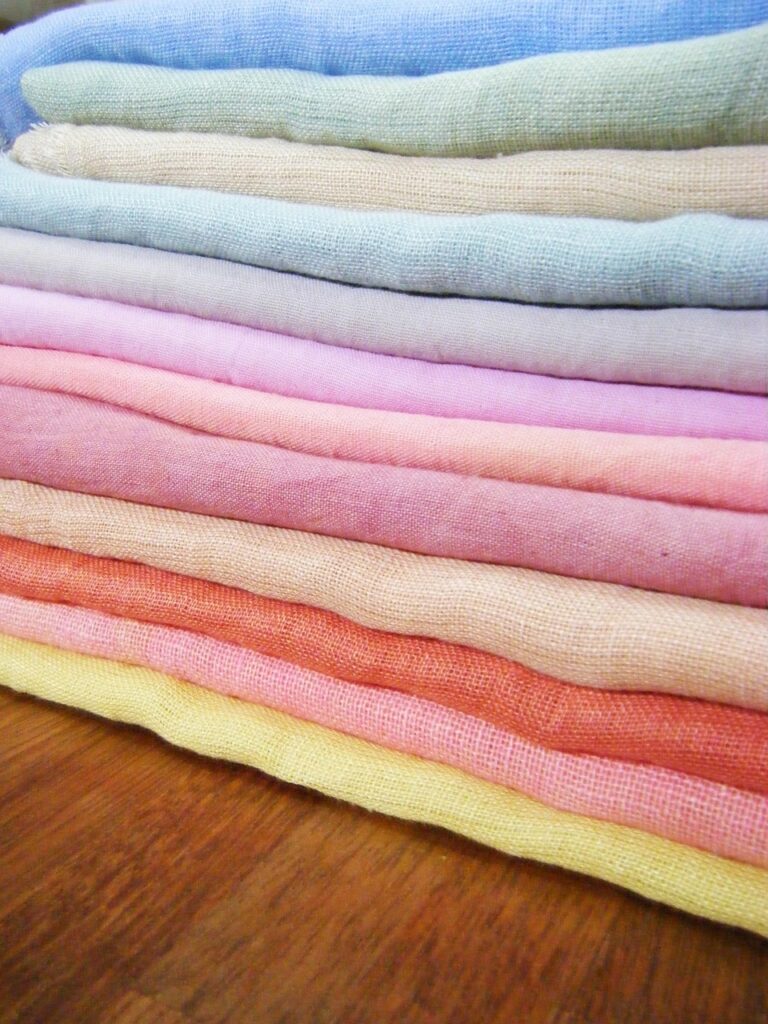
Linen is made from flax (Linum usitatissimum), one of the oldest cultivated fibres, with a history of use going back at least six thousand years.
Flax produces long bast fibres with a dense cellulose structure. Linen is stronger than cotton by weight, highly absorbent, quick-drying, and excellent at conducting heat away from the body, which makes it comfortable in warm conditions in a way few other fibres match. It softens considerably with washing and wear.
It creases because it lacks elasticity. This is a property, not a fault.
Linen’s reputation as a formal or summer-only fabric is largely a misreading. Irish linen sailcloth, linen canvas, and linen workwear are heavy, durable materials suited to hard use. The fine linen of dress shirts is one application of a much broader material.
Linen is covered in depth in Field Guide No. 10.
Identifying Fibre Without a Label
If a label has been removed or is illegible, two tests are useful.
The burn test is the most reliable. Pull a thread from an internal seam and hold it briefly in a flame, then remove it.
- Cotton and linen burn cleanly, smell like paper, and leave soft grey ash.
- Wool smells like burning hair and leaves a crushable black residue.
- Synthetics melt, often continue burning after the flame is removed, and leave a hard plastic bead.
Blends show mixed behaviour: partial ash, partial hardened bead.
Handle and weight are less definitive but useful with practice. Wool feels warm and slightly textured. Linen feels cool and dry. Heavy, dense cloth is usually natural fibre. Experience improves the judgement.
A detailed guide to fibre identification is in Field Guide No. 9.
Caring for Natural Fabrics
Across all natural fibres: lower temperatures, minimal agitation, and slow drying.
Wool: wash at 30°C or below on a gentle cycle, or by hand. Felting from heat and agitation is irreversible. Dry flat, as hanging wet wool stretches it under its own weight. Do not tumble dry.
Cotton: 30-40°C is sufficient. Cold water slows fading in denim. Knitted cotton should be treated more carefully than woven; agitation causes stretching or shrinkage depending on the construction.
Linen: washes well and improves with use. Iron damp.
Waxed cotton: do not machine wash or use detergent. Wipe clean with a damp cloth. Re-wax when the surface stops shedding water.
Storage matters. Moths target wool and other protein fibres, particularly where body oils have accumulated. Store wool clean. Cedar and lavender deter but do not guarantee prevention. Check stored pieces periodically.
Fibre Knowledge and Repair
Understanding fibre changes how you approach damage.
- Thinning cotton at the knees? Patch before a hole forms.
- Wool elbow wearing smooth? Darn early while fibres remain to work with.
- Waxed cotton losing its resistance? Reproof, do not replace.
- Linen seam splitting? Reinforce with matching fibre thread.
Repair works best when material matches material. A wool darn in wool becomes part of the fabric. A cotton patch on cotton, stitched through, integrates over time. A synthetic patch on a natural fibre holds, but it does not age the same way, and it will not integrate.
The label is not a formality. It is a maintenance instruction.
The Speedwell Works newsletter covers this territory in more depth: specific repairs, fibre histories, and the practical knowledge behind working garments. It is free and arrives fortnightly. Sign up at speedwellworks.com/newsletter.
A Note on the First Issue of Speedwell Works
The Speedwell Works newsletter is a fortnightly letter covering textiles, garments, repair, and materials knowledge. Where the Field Guide is a reference document, the newsletter is practical and immediate: each issue focuses on a specific technique, repair, or piece of knowledge you can use directly.
The first issue covers patching a worn knee, one of the most common repairs on working trousers and jeans, with enough detail to do it well the first time.
Subscribers receive it immediately on signing up at speedwellworks.com/newsletter.
Field Guide No. 1 — On the Equipment for Mending Clothing — is at speedwellworks.com/on-the-equipment-for-mending-clothing
Field Guide No. 3 — Waxed Cotton: History, Care, and Reproofing — coming soon.