Speedwell Field Guide No. 1 – On the Equipment for Mending Clothing
Repair is a small act of resistance against waste. A stitch in time keeps a good jacket in use, a torn bag in service, and one less thing in the bin.
It’s also a way of respect for the hands that made a thing, and for the materials that went into it.
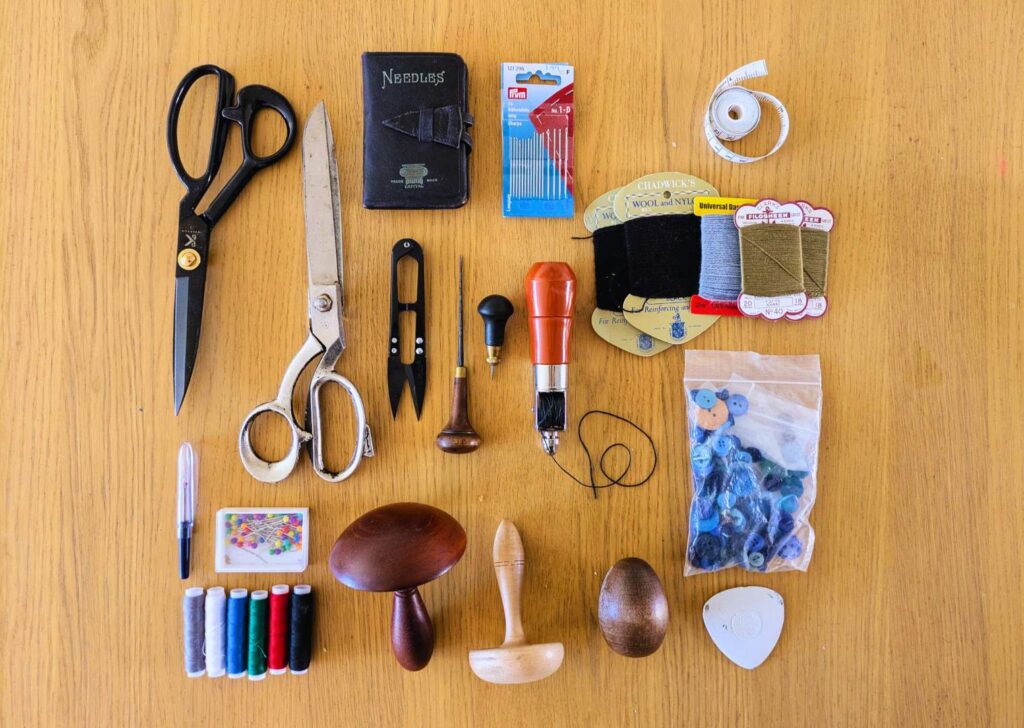
A repair kit is a simple piece of kit worth carrying. You don’t need much, just the right few items kept ready. What follows is a list of proven essentials, the kind of tools that will see you through most small repairs in the field, at home, or on the road.
Basic Sewing Kit
Repair, Sewing & Mending Kit
01
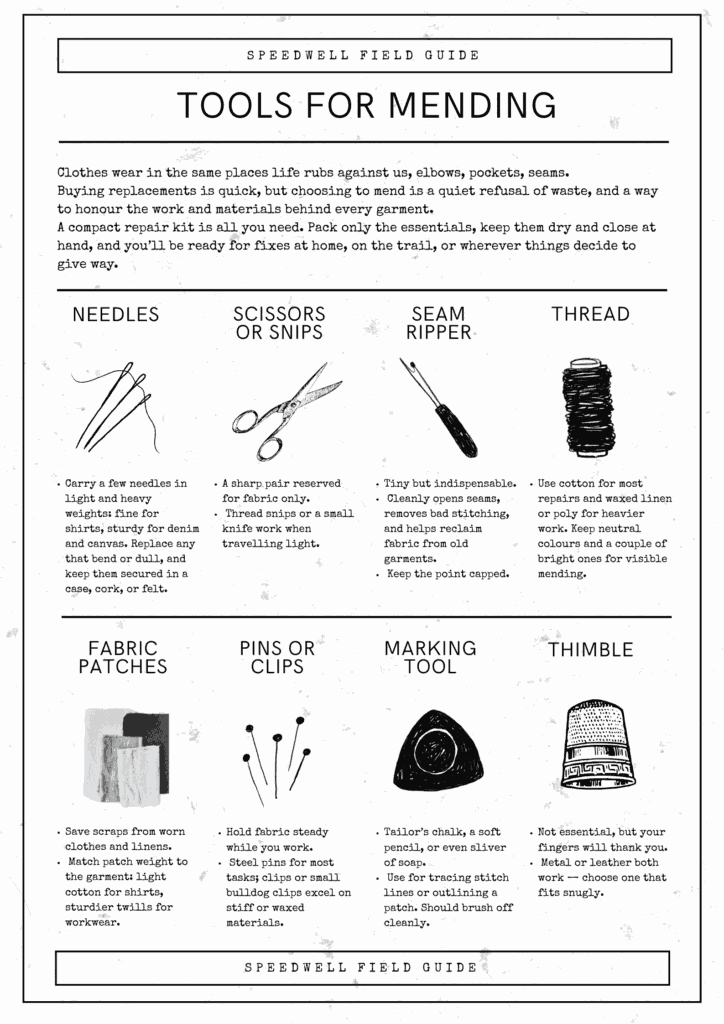
Needles
Carry a small range: light, medium, and heavy.
Inspect the points regularly; replace bent or blunted ones. Store them in a small case, cork, or wrapped in felt to prevent loss.
02
Scissors or Snips
A sharp pair of fabric scissors is essential. Reserve them for cloth only, paper or card will dull the blades.
A small pair of thread snips for tidying lose ends and will serve when travelling light.
03
Seam Ripper
A small but vital tool for any repair kit. Use it to remove seams, open hems, or undo faulty stitches without tearing the fabric.
Keep the point capped when not in use. Also valuable for dismantling old garments to salvage usable cloth.
04
Thread
Use natural-fibre thread wherever possible but polyester is fine and strong.
Cotton for most clothing.
Waxed linen for heavier cloth, canvas, or bags.
Keep a few neutral colours, black, grey, unbleached, and one or two bright for visible mending or marking repairs with intention. Running the thread lightly over beeswax strengthens it and reduces tangles.
05
Fabric Patches
Save offcuts from worn garments, old household linens, or past repairs.
Choose patches close in weight and weave to what you’re mending, light cotton for shirts, heavier twill or denim for workwear.
Linen and cotton breathe well, sew easily, and will soften with use. Roll or fold small patches and keep them dry.
06
Pins and Clips
Used to hold fabric steady while stitching.
Steel pins are traditional, but clips or small bulldog clips work well on thick or waxed material. A few wooden pegs will do in a pinch.
07
Marking Tool
Tailor’s chalk, a soft pencil, or a scrap of soap can mark repair lines or stitch paths.
Make sure it brushes off easily and won’t stain the fabric.
08
Thimble Or Sewing Palm
Optional but recommended.
Metal or leather will protect the fingers when forcing a needle through heavy cloth.
Find one that fits snugly and keep it in your kit.
09
Wax
A small block of beeswax belongs in every repair kit.
Use it to strengthen thread, waterproof seams, or refresh old waxed cloth.
If you wax canvas, keep a separate block for that purpose.
10
Tape Measure
A small, flexible measure is useful for checking patch sizes, seam allowances, or the width of a tear.
Choose a soft cloth or fiberglass tape that won’t crack in the cold. Keep it rolled tight so it doesn’t tangle in your kit.
11
Storage
All of this will fit neatly in a tobacco tin or small canvas pouch.
A few reliable tools are worth more than a drawer of half-used things. Keep it together, keep it dry, and it will be ready when needed.
Note on Maintenance
Repair is maintenance. Maintenance is respect. Look after your kit, and it will look after you. Better to patch than to waste.
A Brief Record
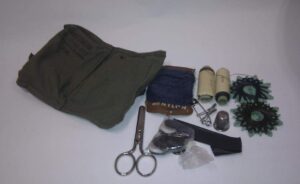
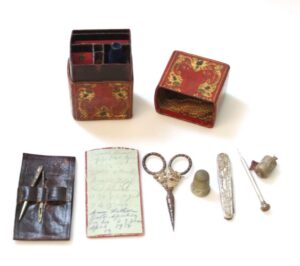
This gallery shows how sewing kits have changed over time, from simple soldier’s rolls to compact travel tins and modern mending pouches. Each reflects its era’s needs, but the purpose is the same: to keep clothing in service for as long as it can be worn.
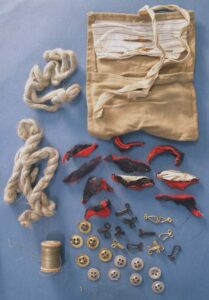
This cotton cloth sewing kit (or hussif) belonged to 25577 Gunner E.A. “Ted” Frost of the 7th Anti-Tank Regiment, NZ Artillery, 2NZEF in WWII. It contains thread, wool, buttons, hooks, and unit patches, including items marked “MILANO CUCIRINI CANTONI” and “BUTTONS LTD. LONDON.”
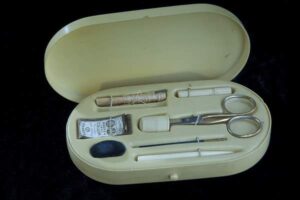
Small sewing kit in a celluloid case. A tray inside the case, also made of celluloid, has pockets for the seven implements, plus a small pincushion covered in blue felt. Some of the implements are also made of celluloid. The kit is unmarked. The scissors were made in Germany, as were the sharps.
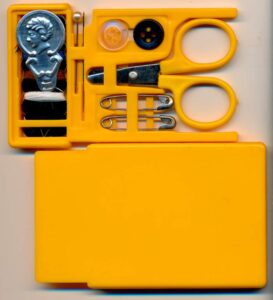
A box with travel sewing supplies given as a promotional gift by Condor Airlines in the 1980s
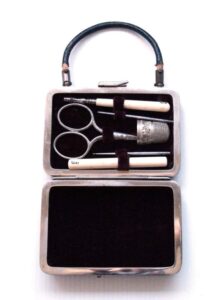
This purse-shaped black leather Lady’s Companion sewing kit belonged to Mrs. Margaret Elizabeth Booth. Lined in dark purple velvet, it holds a thimble, scissors marked “Made in England,” an ivory needle holder, and detachable ivory-handled crochet hooks.
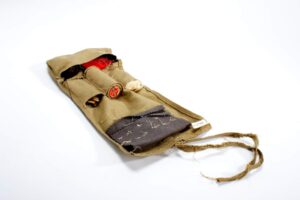
Housewife sewing kit Belonged to 432738 Lieut. Kenneth R Porter, NZ Field Regt., 10th Reinforcements, 2NZEF khaki drill; machine stitched; with grey flannel needle holder; thread, etc
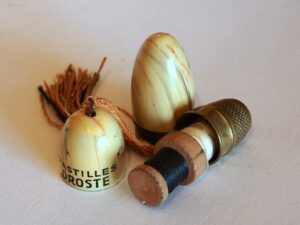
Droste sewing kit
Personal field sewing set of Bundeswehr soldiers
This red morocco leather “Lady’s Companion” sewing kit, shaped like a miniature book, originally belonged to Mrs. Francis Tapp. It contains various sewing implements and a double-sided writing card inscribed with family notes and memorial dates.
Speedwell Field Note – A Brief History
Before clothes were cheap and plentiful, mending was part of daily life. Fabric was slow to make and costly, so garments were worn, patched, and re-patched until nothing usable remained. A repair wasn’t optional; it kept a person warm, decent, and ready.
Soldiers carried housewives, simple rolls of needles, thread, and buttons. A torn seam in the field could mean a ruined pack or a cold night, so the kit was as vital as boots or rations. Civilians had their own versions: small etuis, tobacco tins, embroidered rolls passed down or given as gifts. Every home kept a basket or box for repairs.
These kits mattered because things were kept, not replaced. Mending extended the life of precious cloth and respected the work that made it.
Today, it’s easy to throw away what breaks. But looking at these old kits reminds us of another habit: care. A small repair keeps a garment useful, reduces waste, and carries forward a quiet, enduring tradition of looking after what you own.
Shopping Cart
Manage Consent
To provide the best experiences, we use technologies like cookies to store and/or access device information. Consenting to these technologies will allow us to process data such as browsing behavior or unique IDs on this site. Not consenting or withdrawing consent, may adversely affect certain features and functions.
Functional
Always active
The technical storage or access is strictly necessary for the legitimate purpose of enabling the use of a specific service explicitly requested by the subscriber or user, or for the sole purpose of carrying out the transmission of a communication over an electronic communications network.
Preferences
The technical storage or access is necessary for the legitimate purpose of storing preferences that are not requested by the subscriber or user.
Statistics
The technical storage or access that is used exclusively for statistical purposes.The technical storage or access that is used exclusively for anonymous statistical purposes. Without a subpoena, voluntary compliance on the part of your Internet Service Provider, or additional records from a third party, information stored or retrieved for this purpose alone cannot usually be used to identify you.
Marketing
The technical storage or access is required to create user profiles to send advertising, or to track the user on a website or across several websites for similar marketing purposes.