
Sewing is not a difficult skill to begin. It requires a needle, some thread, and a little patience. The tools are inexpensive, the materials are widely available, and the basic techniques can be learned in an afternoon. What takes time is developing judgement. Knowing which thread to choose, which needle suits the job, how to start and finish cleanly.
That judgement comes from practice, but it starts with understanding a few simple principles. This guide covers these ideas.
It is also worth saying at the outset that hand sewing and machine sewing are different disciplines. Machine sewing is faster, more consistent, and better suited to long seams, garments, and production work. Hand sewing is slower, more controlled, and better suited to repair, detail work, and situations where a machine cannot easily reach. Most sewing practice involves both. This guide focuses mainly on hand sewing, with notes on thread choices that apply to machine work where relevant.
What Thread Is?
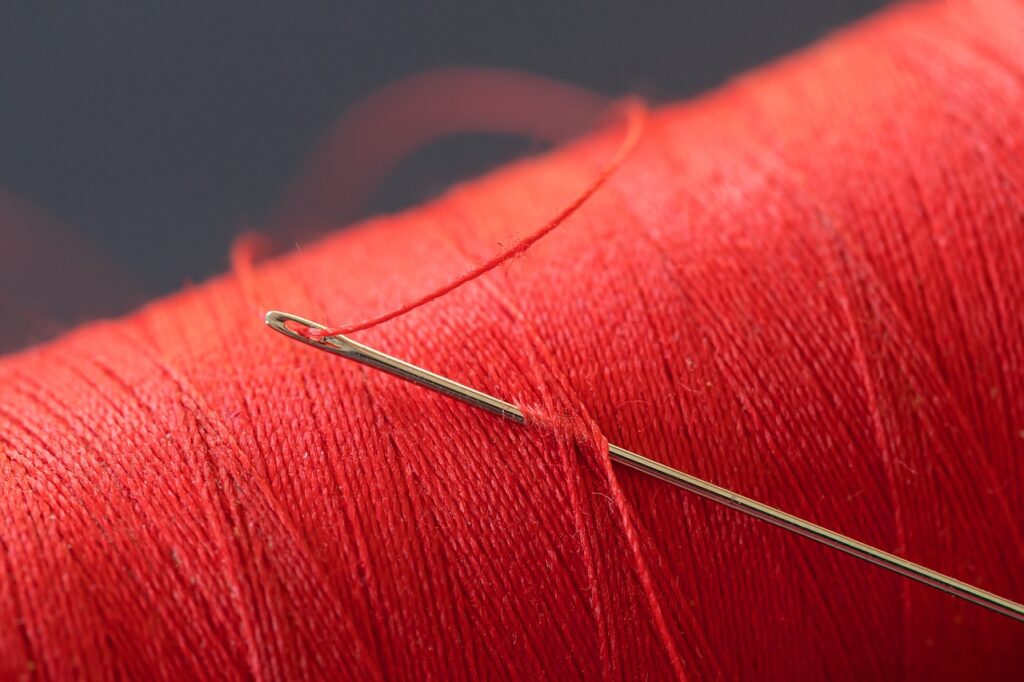
Thread is twisted fibre.
Thread begins as fibre; cotton, wool, linen, silk, or a synthetic such as polyester or nylon. The fibre is spun into a single, and one or more singles are then twisted together (plied) to produce stronger thread. The twist is what gives thread its strength: the strands lock against each other under tension rather than pulling apart.
Many modern sewing threads are also core-spun, with a strong synthetic filament core wrapped in finer fibres. This produces thread that is smooth, strong, and consistent, which is why it is widely used for machine sewing.
Untwist a length of thread and the individual strands are weak. Together, under tension, they hold.
This matters because it means that in a pinch, almost any stranded material can serve as thread. The principle of repair is that a hole is closed, a seam is rejoined, a worn area is reinforced. The material doing that work does not strictly need to come from a haberdashery.
A length of twine unpicked from packaging, yarn pulled from a knitting project, thread salvaged from a seam allowance . All of these have been used for repair and all of them can work, provided the weight and character of the material suits the job.
For visible repair the scope widens further. A torn pocket on a pair of jeans whip-stitched with heavy natural fibre thread originally intended for fishing nets becomes a repair with genuine character. The thread was coarse, closer to twine than conventional sewing thread, but it was the right weight for the stitch and the right material for the job. The result was stronger for it.
Natural and Synthetic Thread
Sewing thread is made from both natural and synthetic fibres. Each behaves slightly differently.
- Polyester thread is the modern standard. It is strong, resistant to abrasion, and holds up well under repeated washing and exposure to sunlight. For most general repair and machine sewing, polyester is the practical choice.
- Cotton thread is softer and slightly weaker than polyester. It works well with cotton fabrics and is often used for quilting and traditional sewing where a natural fibre thread is preferred.
- Silk thread is extremely strong for its thickness and useful for fine fabrics and tailoring.
- Linen thread was historically used for heavy sewing and leather work, and remains the standard for hand-sewn bookbinding and some traditional shoemaking.
- Wool yarn is best suited to darning wool garments, where the repair needs to match the stretch and structure of the original fabric.
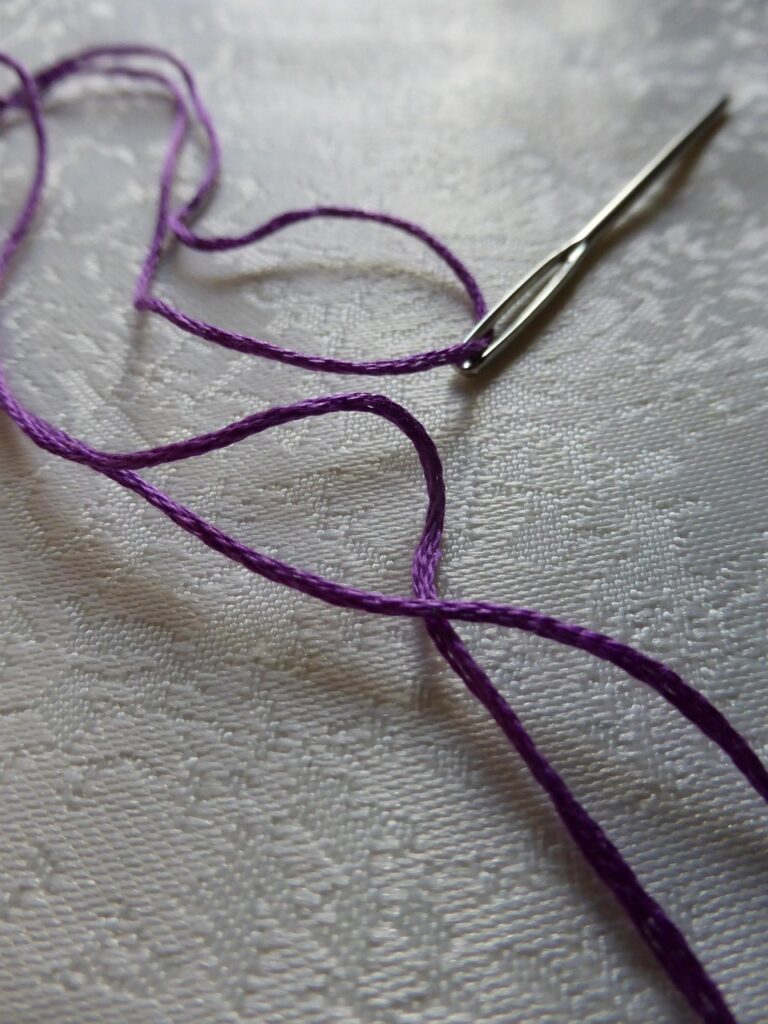
As a general rule, thread should be similar in weight and character to the fabric being repaired. Thread that is dramatically stronger than the cloth can in theory concentrate stress along the stitch line, though in practice, on garments being maintained and repaired rather than put under extreme load, this is rarely the problem it is sometimes made out to be.
Traditional tailoring sometimes takes advantage of this principle deliberately: seams are sewn with thread slightly weaker than the cloth so that if a garment fails under stress, the stitching breaks before the fabric tears. Restitching a seam is far easier than repairing torn cloth.
How Thread Is Made and Described
The number of plies and the tightness of the twist affect how thread behaves. A tightly twisted thread is smooth and strong and passes cleanly through fabric. A loosely twisted thread is softer and has more surface texture, which suits embroidery and visible stitching but can snag in a sewing machine.
Machine sewing generally requires smoother, more uniform thread than hand sewing. Heavier or loosely twisted threads that work well by hand can jam or break when used in a machine.
Thread weight is expressed differently by different manufacturers. The most common system uses a ticket number. In this system, higher numbers correspond roughly to finer thread. Ticket 120 is fine and used for delicate fabrics and very fine machine stitching. Ticket 40 is heavier and suited to canvas, denim, and bag-making. For general garment repair on medium-weight fabrics, ticket 50 or 60 is the most useful range.
Getting the weight wrong matters in both directions. Thread that is too fine will break under normal stress. Thread that is too heavy will pucker the fabric, leave visible holes at each stitch point, and sit on top of the cloth rather than bedding into the weave. When in doubt, hold the thread against the fabric, it should look proportionate, neither disappearing nor overwhelming the cloth.
If you are standing in a haberdashery unsure what to buy, a ticket 50 or 60 general purpose polyester thread covers the majority of everyday repair situations.
Needle and Thread Together
Thread and needle are chosen together. A needle that is too fine will not allow the thread to pass cleanly through the eye, making threading difficult and causing the thread to fray during sewing. A needle that is too large leaves holes in the fabric bigger than the thread fills, visible on fine cloth and a structural weak point in any repair.
The right needle allows the thread to pass through the eye smoothly while still matching the scale of the fabric. A practical test: if the thread slides easily through the eye but does not rattle around inside it, the pairing is usually correct.
Common Needle Types
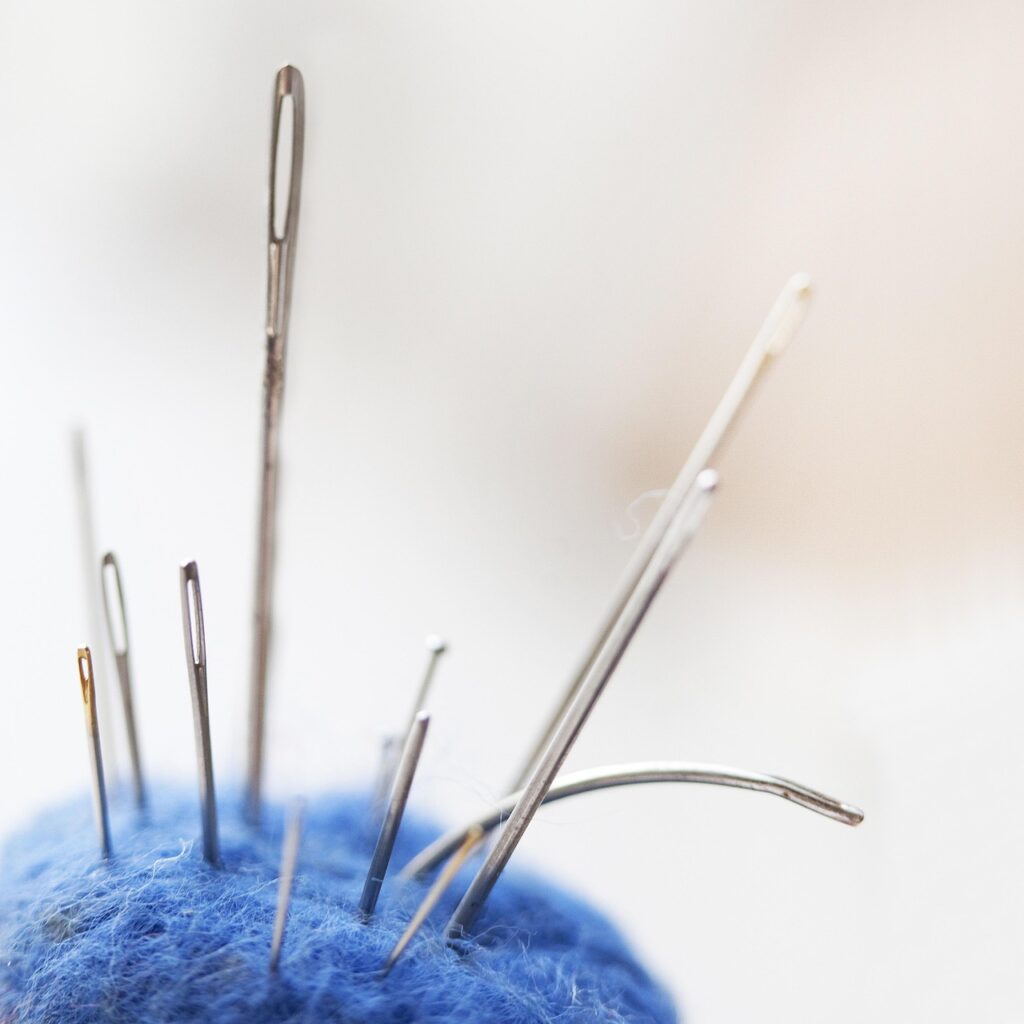
A basic repair kit does not need many needle types, but understanding the common ones is useful.
A sharps needle is the standard hand sewing needle. They are medium length with a small round eye and sharp point. Suitable for most general repair work on woven fabrics. This is the needle to reach for first if you are unsure.
A darner is longer than a sharps with a larger eye, designed for darning with wool yarn or heavier thread. The length gives more control when weaving back and forth across a worn area.
A sashiko needle is longer still, typically 45 to 50mm, with a large eye for thick cotton thread. The length allows several running stitches to be gathered onto the needle at once before the thread is pulled through. Using a standard sharps for sashiko forces the needle through one stitch at a time, which is slow and frustrating by comparison.
A between, sometimes called a quilting needle, is shorter than a sharps with a small eye. It provides precise control for fine stitching and detailed repair work.
A ballpoint needle is designed for knitted fabrics such as jersey and sweatshirt cloth. The rounded tip slides between yarn loops rather than piercing them, which reduces damage to the knit structure. Worth adding to the kit once you begin working with T-shirts, knitwear, or any fabric with stretch.
A jeans or denim needle has a reinforced shaft and sharp point designed to penetrate tightly woven and heavy fabrics without deflecting or breaking.
A basic repair kit needs only a sharps and a darner to begin. Add needle types as specific techniques require them.
Working With Thread
Cut thread to roughly an arm’s length (about 45 to 50cm). Thread tangles because it twists as it passes repeatedly through fabric. Shorter lengths reduce this and keep the thread from knotting. Thread also weakens slightly with each pass through cloth, so shorter lengths maintain strength throughout the repair.
If thread consistently snarls, try reversing the direction you threaded the needle or working with a shorter length. Running thread through beeswax before sewing also helps, it reduces friction, smooths the surface, and prevents tangling. It is a useful habit for hand repair work generally.
Starting and Ending a Thread
A repair is only as secure as the thread holding it. Thread that is not anchored properly at the start or end will loosen with wear and washing, and the repair will fail from the edges inward.
For most hand repair, begin with a simple overhand knot at the end of the thread. The knot sits against the back of the fabric and prevents the thread from pulling through. It is fast, secure, and entirely sufficient for work that will be hidden.
Where the knot would be visible or create a bump on the surface, begin instead with two or three small backstitches into existing fabric before starting the repair proper. The thread locks into the weave without a knot and lies flat. This is the right approach for visible mending and for any repair where the underside of the work will be seen or felt.
End a thread the same way: a knot on hidden work, two or three backstitches worked into the finished repair on visible work. Cut the tail close. Long tails catch, fray, and eventually pull the ending loose.
Polyester Thread
For machine sewing and for closing seams by hand, polyester thread is the practical first choice, regardless of what the garment is made from. Cotton thread weakens more quickly with repeated washing, UV exposure, and abrasion. Polyester resists these forces considerably better, which is why it has become the standard thread for modern garment construction and repair alike.
Most domestic sewing machines are designed to run polyester thread reliably. For machine work, a ticket 50 or 60 general purpose polyester thread suits the majority of fabrics.
Use thread matched as closely as possible to the garment colour. For invisible repairs the match matters. For hidden seam work, a close neutral is sufficient. Button thread, a heavier polyester thread designed specifically for attaching buttons is worth keeping for reinforcing stress points.
Thread for Darning
Darning replaces worn cloth by weaving thread across a hole or weakened area. The thread becomes structurally part of the fabric, so it should match the weight and stretch of the original material as closely as possible.
For wool garments, wool yarn is the right material. Fingering weight is the fine end of knitting yarn, typically used for sock knitting, suits medium weight wool fabrics well. It is widely available in charity shops and worth picking up when the colour is useful. A single ply separated from a multi-ply yarn can be used for finer work. DMC and similar manufacturers produce dedicated darning threads in wool in a wide range of colours, useful for colour matching when charity shop yarn does not provide the right shade.
For cotton fabrics, a fine cotton thread or a single strand of embroidery thread works well. Adjust the thickness to suit the fabric.
Thread for Visible Repair and Sashiko
Visible repair treats stitching as part of the design. Thread should be thick enough to read clearly on the surface of the cloth, and colour should be chosen deliberately rather than matched exactly.
Sashiko is a Japanese hand stitching tradition using a thick, smooth cotton thread worked in running stitch. Historically to reinforce worn cloth, now widely used for visible repair. Dedicated sashiko thread exists but is not always easy to source in the UK at a reasonable price. Perle cotton is a twisted, non-divisible embroidery thread from DMC and others is an excellent substitute. No. 3 and No. 5 work well for sashiko and visible mending generally. It comes in a large range of colours and is available in most haberdasheries without difficulty.
Embroidery floss, the standard six-strand divisible thread can also be used, with all strands together for bold work or fewer for finer detail. It has a softer, less lustrous surface than perle cotton, which suits some applications and not others.
For visible repair, choose thread that is noticeably thicker than the fabric’s own weave. Too fine and it disappears into the cloth. A repair made in a complementary colour that has been thought about looks intentional. The same repair in a thread that almost matches looks like a failed attempt to hide it.
Thread Finishes
Some threads are treated after spinning. Mercerised cotton has been treated with sodium hydroxide to produce a smoother, stronger, more lustrous thread than untreated cotton. Bonded nylon thread is coated to resist abrasion and is used in heavy-duty sewing such as upholstery and leather work. These specialised threads are less common in everyday repair but worth knowing about when a job requires something more durable than standard thread.
Storing Thread
Thread weakens when exposed to sunlight, heat, and dust over time. Store thread in a drawer or box rather than leaving it on an open shelf or windowsill. Keeping it clean and away from light will preserve its strength considerably longer than leaving it exposed.
What to Keep in a Working Kit
A practical thread kit does not need to be large. The following covers most situations a beginner will encounter, and most of what an experienced repairer reaches for regularly.
Polyester thread in neutral colours, black, off-white, grey, navy, and olive handles most invisible seam and repair work. Add specific colours as garments require them.
Fingering weight wool yarn in natural and neutral tones for darning. Charity shops are a reliable and inexpensive source.
Perle cotton No. 5 in a working palette of eight to ten colours for visible repair and sashiko.
A fine thread for lightweight fabrics.
Two needles to begin: a sharps and a darner. Add a ballpoint when working with knitted fabrics and a sashiko needle when you begin that work.
None of this is expensive or difficult to assemble. A needle, a length of thread, and the willingness to try is enough to make a first repair. Everything else follows from practice.